


Health science and policy summaries
Concise overviews of current evidence on air quality, energy access, climate change, and health
Highlights
Concise overviews of current evidence on air quality, energy access, climate change, and health

WHO invites governments, agencies and organizations to pledge voluntary actions to reduce the health impacts of air pollution by 50% by 2040.
.jpg?sfvrsn=d51a0bea_8 "Hero Banner Call to action for clean air")
Stop polluting the air we breathe – prevent diseases and save lives
/country-readiness-strengthening-(crs)/community-readiness-and-resilience-(crr)/beat-the-heat-banner-cropped.jpg?sfvrsn=a5bbb703_3 "beat-the-heat-banner-cropped")
Initiative against extreme heat and related environmental health risks in workplaces and major events
Factsheets
All →Air pollution is the leading environmental health risk factor causing about 6.6 million deaths globally every year. Currently reported as Sustainable Development...
Air pollution remains one of the leading environmental risks to health globally, contributing to an estimated seven million premature deaths each year...
Monitoring air quality (for example collecting continuous and quality data) is integral and critical to detecting air pollutants and to ensuring information...
Air quality indexes (AQIs) are widely used to communicate short-term air pollution concentrations and related health risks to the public. Conventional...
/environment-climate-change-and-health-(ech)/air-quality-energy-and-health-(aqh)/module-5-card.tmb-144v.png?sfvrsn=83bcff7d_4)
This module will provide an introduction to the global and regional trends in access to clean household energy and clarify the evidence for defining “clean”...
/environment-climate-change-and-health-(ech)/air-quality-energy-and-health-(aqh)/aq-database-june-2026.tmb-144v.png?sfvrsn=fd74cf96_1)
The WHO Ambient Air Quality Database compiles ground-level measurements of annual mean concentrations for nitrogen dioxide (NO2), and particulate matter...
/environment-climate-change-and-health-(ech)/air-quality-energy-and-health-(aqh)/sdg-flyer-air-pollution-energy-and-health.tmb-144v.jpg?sfvrsn=c69d4ae7_1)
WHO is the custodian agency of a handful of SDG indicators for Goals 3 (pertaining to good health and well-being), but also in Goals 2 (Zero hunger), 5...
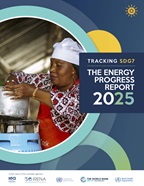
Tracking SDG 7: The Energy Progress Report 2025 finds that almost 92% of the world’s population now has basic access to electricity. Although this...
Multimedia
All →


