
Collaboration
Collaboration
The EIOS initiative is more than just the system; it is a global effort to transform Public Health Intelligence (PHI) by connecting open-source information, technology, and people. As a WHO-led initiative, EIOS sits at the center of a collaborative ecosystem, enabling the timely sharing of knowledge and insights to prevent, prepare for, respond to, and recover from health emergencies. By integrating advanced information technology tools, artificial intelligence, and public health expertise across geographies, domains and sectors, EIOS strengthens collaborative surveillance and enables early detection and risk assessment of health threats, embodying a One Health, all-hazards approach.
To achieve its vision, the EIOS initiative bridges collaborative innovation in technology with capacity building through PHI Training. Our Technology collaboration projects drive advancements in innovative tools within and around the EIOS system, while our PHI Training collaboration projects focus on building the global workforce needed to use these solutions effectively. Together, these components form the foundation for enhanced PHI, where cutting-edge technology meets a well-trained global network of experts.

Technology
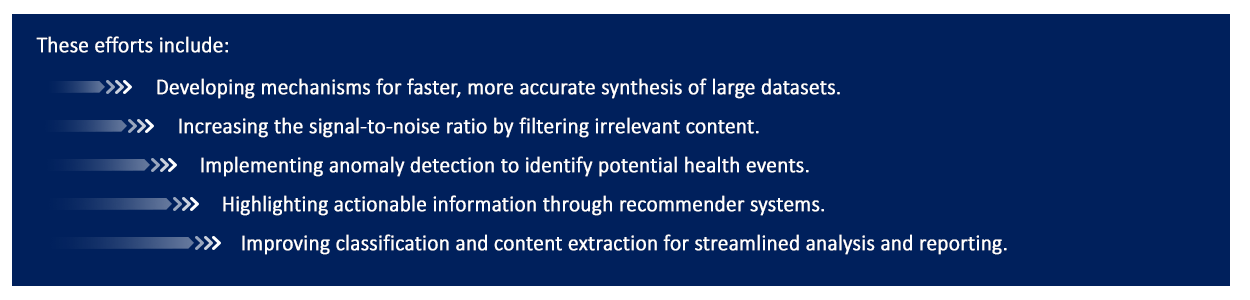
The EIOS system processes and categorizes information from tens of thousands of publicly accessible online sources, offering a comprehensive interface for PHI analysts to collect, analyze, and act on critical information. The system continuously processes hundreds of thousands of articles daily, categorizing and enriching content across hundreds of themes and topics while extracting key information such as locations and entities for analysis. During high-volume events, such as the COVID-19 pandemic, the system faced a significant surge in demand, with throughput increasing tenfold in the early days of the crisis. At this scale, quickly identifying trends, emerging topics, and actionable insights is challenging, particularly in the context of mis- and disinformation. To ensure the system remains scalable and effective during future crises, several collaborative initiatives aim to enhance its ability to handle increasing data volumes while maintaining high performance and enhanced support for PHI analysts.
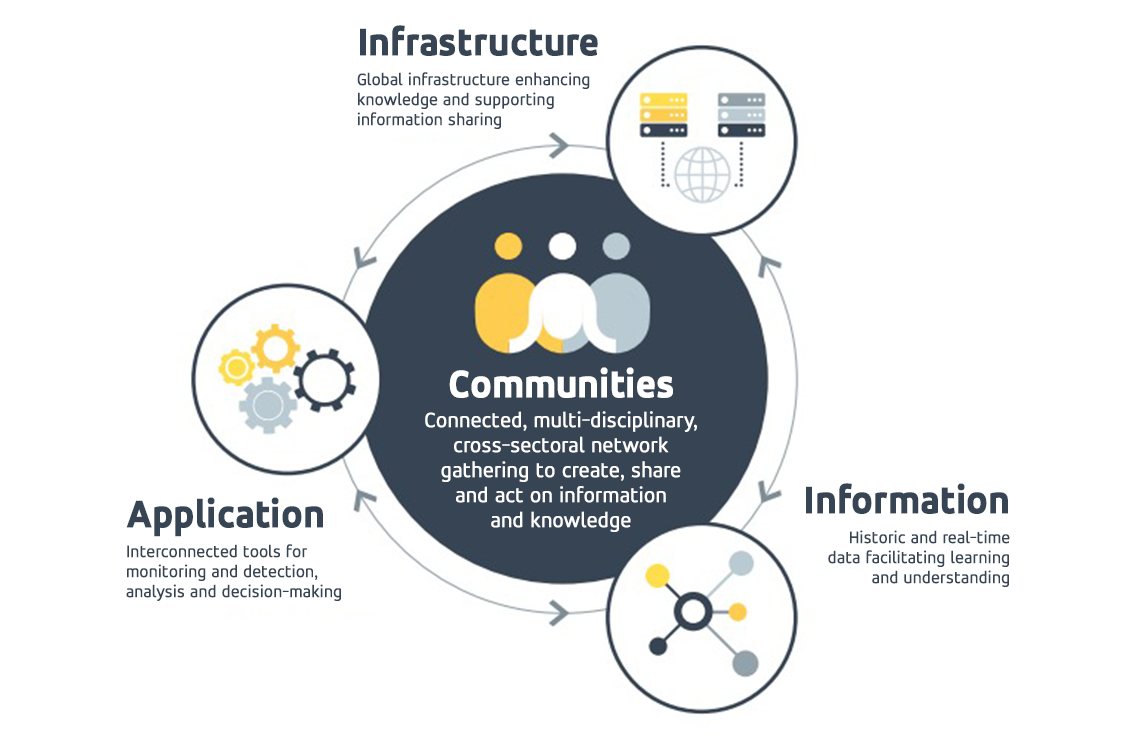
The core of the EIOS system is the product of a longstanding collaboration between WHO and the European Commission's Joint Research Centre (JRC). To enable JRC to focus on advanced research, WHO has partnered with Adappt.ai to gradually assume the system's maintenance, operations, and further development. This collaboration aims at ensuring seamless integration of new solutions developed by other EIOS partners.
WHO and JRC are both receiving generous support from the Health Emergency Preparedness and Response Authority (HERA) of the European Commission.

EIOS System v.2
Collaborators: JRC, Adappt

Abstractive Summarization
Collaborators: WHO IT Teams, WHO Project Management Office

Anomaly Detection
Collaborators: Adappt

Enhanced Web Scraping
Collaborators: Adappt

Semantic Search
Collaborators: Adappt
Graph-Powered Category Editor
Collaborators: Adappt

Recommender System and Collective Intelligence
Collaborators: JRC

Speech-to-Text Sources from Radio
Collaborators: UN Office for Information and Communications Technology (UN OICT)

EIOS Noise Reduction
Collaborators: Robert Koch Institute (RKI)

Other Projects
Training
Effective Public Health Intelligence (PHI) depends on a skilled and adaptable workforce capable of transforming and interpreting vast amounts of raw data into actionable insights. Training and capacity-building initiatives are essential to empower professionals with the competencies needed to respond to health threats in real time. The EIOS initiative recognizes the critical role of training in fostering a unified global approach to PHI. Through collaborations with partners such as the WHO Academy, the Robert Koch Institute, PHI Training Working Group , and others, we develop and deliver tailored training programs, competency frameworks, and innovative learning approaches. These efforts ensure that public health professionals are equipped to navigate evolving challenges with confidence, promoting data-driven decisions and timely action across a One Health, all-hazards framework.

PHI Capacity Building Collaborations
The training package has been adapted into the Foundations of Public Health Intelligence (PHI): Lead, Implement, and Practice online course, which is publicly available on the WHO Academy Learning Platform. This self‑paced, eight‑hour course introduces learners to PHI and equips them with the foundational knowledge and skills needed to advocate for and participate in PHI activities.
Collaborators: Robert Koch Institute (RKI), WHO Regional Office for the Eastern Mediterranean (EMRO), and the WHO Academy.


PHI Training Working Group
Collaborators: Ministry of Health Brazil, Robert Koch Institute (RKI), Africa Center for Disease Control (Africa CDC), European Center for Disease Control (ECDC), Food and Agriculture Organization (FAO), Singapore, WHO PHI Unit and other global partners.

Respiratory Pathogen Surveillance Collaboration
Collaborators: WHO Global Influenza Programme (GIP) and other global partners.

WHO Academy Collaboration for Capacity Building
Collaborators: WHO Academy

Building and Strengthening PHI Competencies
Collaborators: Training Programs in Epidemiology and Public Health Interventions Network (TEPHINET), Robert Koch Institute (RKI) and other global partners.
For more information, please visit the Strengthening PHI Competencies Initiative website. In here you will be able to download the PHI Competency Framework and the PHI Curriculum.
In addition to these efforts, we have collaborated closely with the Italian Istituto Superiore di Sanità (ISS) and the European Centre for Disease Prevention and Control (ECDC) on the development of the Epidemic Intelligence (EI) online self-paced training course, now available on the WHO Academy platform. This partnership brings together complementary expertise to present a comprehensive overview of EI principles and practices, grounded in real-world examples from global and national public health institutions.
The course introduces participants to key approaches in Epidemic Intelligence, including early identification, verification, assessment, and investigation of potential public health threats. It features case examples from WHO, ECDC, and ISS, as well as videos highlighting Member States’ experiences in implementing EI systems. The training also aims to foster a strong culture of epidemic intelligence and increase awareness of the Epidemic Intelligence from Open Sources (EIOS) initiative as a pathway for strengthening national EI capacities.
Access the course here.