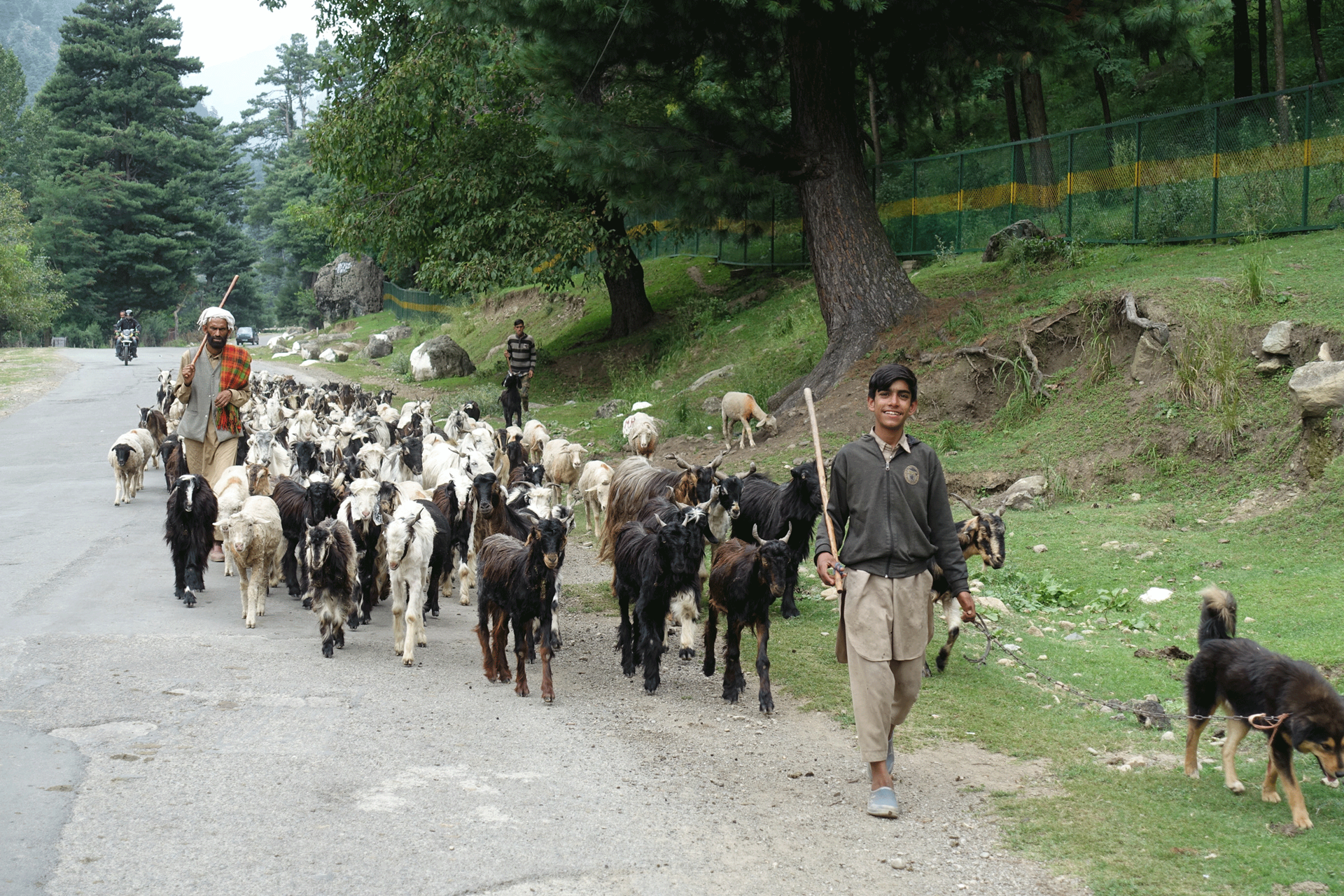
WHO/Gyanendra Gongal
© Credits

One health

    Overview

    The outbreak of highly pathogenic avian influenza (H5N1), Crimean Congo Hemorrhagic fever and Nipah virus in South-East Asian countries clearly demonstrated that new highly infectious and/or highly pathogenic agents periodically emerge at the human-animal interface which will continue to occur. International Ministerial Conference on Avian and Pandemic Influenza (IMCAPI) held in New Delhi in 2007 which came up with a New Delhi Roadmap. The roadmap offered a valuable benchmark for the preparedness efforts of national authorities and proposed a convergence between animal and human health systems through contributions to the ‘One World One Health’ (OWOH) concept. The conference also requested Food and Agriculture Organization of the United Nations (FAO), the World Health Organization (WHO) and the World Organisation for Animal Health (WOAH) and other international partners to develop a strategic framework for implementation of OWOH. Country’s experiences with avian influenza and pandemic (H1N1) in 2009 have reinforced the need for sustained, well-coordinated, multi-sector, multi-disciplinary, community-based actions to address emerging disease threats, i. e. One Health approach. There is a growing acceptance of ‘One Health’ concepts and usage of the approach in recent years. The political will is increasing, and more attention is needed on how the broad scope of One Health is translated into practice.


    Details

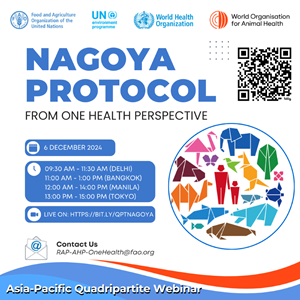
    The FAO, WHO, WOAH and have established a tripartite coordination mechanism in the Asia-Pacific region since 2011 and working together to advocate and institutionalize a functional coordination mechanism between human and animal health sectors at country level through various joint activities. The tripartite group has identified antimicrobial resistance (AMR), food safety, rabies and zoonotic influenza as focus areas for operationalization of One Health. The Tripartite partnership for One Health formally became the Quadripartite as it signed a Memorandum of Understanding with United Nations Environment Programme (UNEP) in March 2022. The Quadripartite group came up with One Health - Joint Plan of Action (OH-JPA) on which proposes a set of activities that the four organizations can offer together to enable countries to advance and sustainably scale up One Health in managing health threats to humans, animals, plants, and the environment.


    More information

    A series of policy advocacy meetings, workshops and webinars have been organized by WHO in coordination with FAO and WOAH at country and regional levels. WHO in coordination with FAO and WOAH supported development of One Health policy and strategy in Member States namely Bangladesh, Bhutan, Indonesia, Myanmar, Nepal and Timor-Leste. Each Member state has established One Health coordination mechanism and there are various networks and initiatives for One Health governance in this region and it is high time to do situation analysis, identify gaps in establishment and/or strengthening One Health governance including resource mapping and it has been started with Indonesia and Bangladesh.

    Our work

    News

    All →

    One Health in All Policies

    All →
    Indicators for human exposures to zoonotic pathogens

    This report presents a WHO–PREZODE collaboration to develop and validate standardized indicators that assess the risk of zoonotic disease emergence...

    Global research agenda for antimicrobial resistance in human health

    The World Health Organization's global research agenda for antimicrobial resistance in human health is the first of its kind, developed to promote the...

    Workforce development for effective management of zoonotic diseases: operational tool of the 'Tripartite zoonoses guide'

    The “Workforce development for effective management of zoonotic diseases: an operational tool of the Tripartite Zoonoses Guide (WFD OT)" focuses...

    Monitoring and evaluation for effective management of zoonotic diseases: an operational tool of the 'Tripartite zoonoses guide'

    Implementing a multisectoral, One Health approach for monitoring and evaluation (M&E) generates evidence for countries to inform more effective decision-making...

    Resource Materials

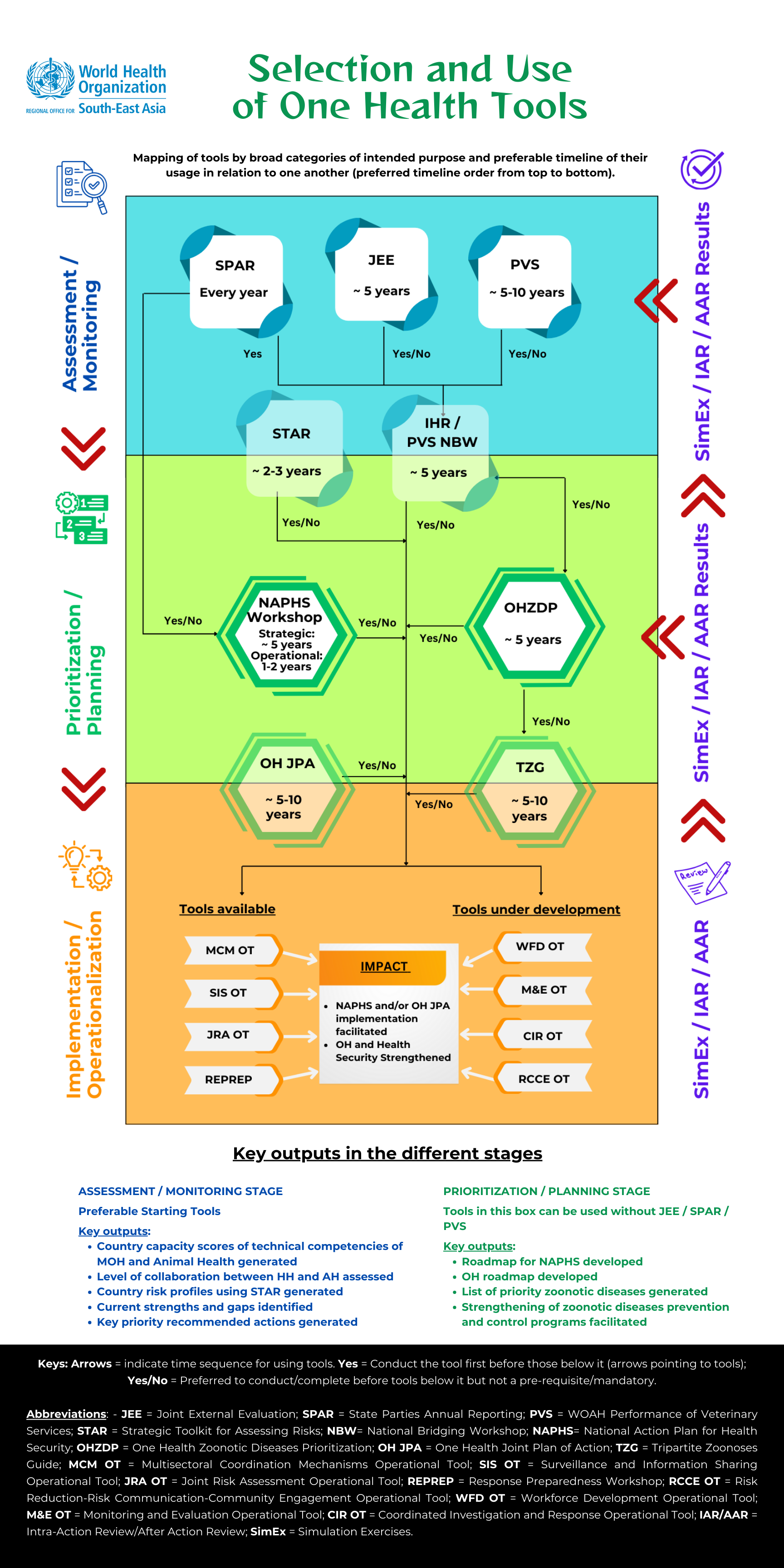
    Guidance on Selection and Use of One Health Operational Tools
    The One Health (OH) High-Level Expert Panel (OHHLEP) of the Quadripartite Organizations defined OH as an integrated, unifying approach that aims to sustainably...

    One Health Networks

    One Health advocacy platform in the Region

    Related health topics