Caesarean section
Worldwide, caesarean section rates have been steadily increasing, without significant additional benefit to the health of women or their babies.
In response to requests from health professionals and countries, in 2018 WHO used HRP evidence to develop programmatic guidance on non-clinical interventions that can be implemented to reduce the unnecessary use of caesarean sections.
The release of these recommendations was accompanied by the publication of a Series in The Lancet on optimizing the use of caesarean section, which discusses many of the issues addressed by the WHO guideline.
Interactive tool
Questions and answers
News
Publications
WHO recommendations: non-clinical interventions to reduce unnecessary caesarean sections
WHO recommendation on vaginal preparation with antiseptic agents for women undergoing caesarean section
The recommendation in this document thus supersedes the previous WHO recommendation on vaginal preparation with antiseptic agents for women undergoing...
The recommendation in this document thus supersedes the previous WHO recommendation on prophylactic antibiotics for women undergoing caesarean section...
WHO recommendations on choice of antiseptic agent and method of application for preoperative skin preparation...
The recommendations in this document thus supersede the previous WHO recommendations for choice of antiseptic agent and method of application for preoperative...
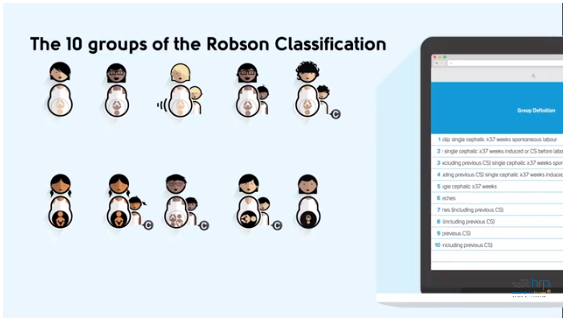
Robson Classification: Implementation Manual
In 2015, WHO proposed the use of the Robson classification (also known as the 10-group classification) as a global standard for assessing, monitoring and...
WHO statement on caesarean section rates
Since 1985, the international healthcare community has considered the ideal rate for caesarean sections to be between 10-15%. Since then, caesarean sections...
Caesarean section without medical indication increases risk of short-term adverse outcomes for mothers
Caesarean section is one of the most commonly performed surgical operations in the world today. However, in a growing number of cases worldwide, caesarean...